
Medical Device Go-to-Market Strategy in Saudi Arabia and the GCC: What Changes
Four things change in a medical device go to market strategy for the Gulf. A translated brochure covers none of them.

A medical device go to market strategy for Saudi Arabia and the GCC changes in four places: registration, the buying route, reference sites and local service. Each one differs by country and by buyer type. A translated brochure and a converted price list do not answer any of them, so each needs a clear answer before launch.
Why a medical device go to market strategy changes in the Gulf
Many companies write their medical device go to market strategy for the Gulf the same way. The brochure goes into Arabic. The price list is converted. A launch date is set.
In my years in medical equipment, based in Kuwait and later covering the Gulf for US and European companies, the questions that decided a sale were rarely in the brochure. They were these four.
1. Registration comes first
In Saudi Arabia, a device can be placed on the market only after it is registered with the Saudi Food and Drug Authority and holds a Medical Devices Marketing Authorization (MDMA). SFDA sets this out in its marketing authorization requirements. A manufacturer outside the Kingdom also needs a local authorized representative. Each GCC country has its own regulator and its own steps, so approval in one does not cover the next.
2. The buying route decides the sales work
Many public hospitals buy through tenders and central purchasing. In Saudi Arabia, the National Unified Procurement Company (NUPCO) runs central purchasing for much of the public health sector. A private hospital group may decide in a few meetings. A small clinic may buy from a dealer it already knows. These are three different sales jobs.
3. Buyers ask who already uses it
Clinical teams want a reference they can call. That reference does not have to be in the same country. I saw machines installed because the deciding reference site was in another Gulf country. So plan your first reference site as carefully as your first sale.
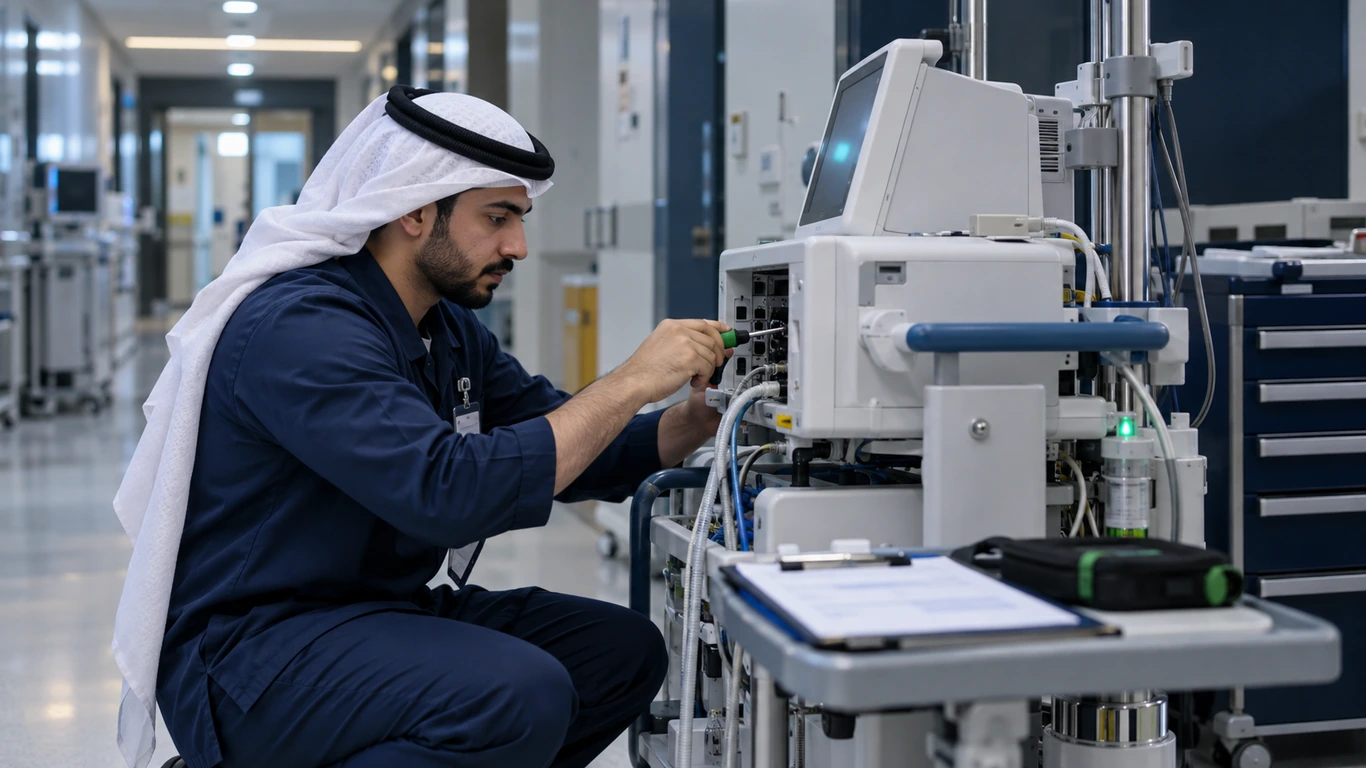
4. Service is part of the product
Before they ask about features, biomedical engineers ask who will fix the device, how fast, and where the spare parts are kept.
One go to market strategy does not fit every buyer
| Buyer type | How they often buy | What they check first |
|---|---|---|
| Public hospital | Tender or central purchasing | Registration, technical specs, price |
| Private hospital group | Committee, then direct order | Reference sites, service, total cost |
| Clinic or small center | Direct, often through a dealer | Price, training, payment terms |
The table is a simple guide, not a rule. Check the real route with each account. The point is that one message and one sales process will not serve all three.
Market entry strategy: checking the distributor
For most device makers, the market entry strategy for the Gulf runs through a distributor. Check five things before you sign:
- Portfolio. What else do they sell to the same department? Will your device get their time?
- Access. Which hospitals do they reach, by name?
- Tenders. Do they know how to prepare tender files, and have they won in your category?
- Service. Do they have trained engineers and a spare parts stock?
- Plan. What will they do in the first 90 days, and what happens if targets are missed?
Seven questions to answer before launch
A medical device go to market strategy is ready when you can answer these for one exact country and one exact buyer type:
- Is the device registered here, and who holds the registration?
- How does this buyer type buy: tender, committee or direct?
- Who writes the technical specs, and who signs?
- Which reference site will this buyer trust?
- Who services the device, and how fast?
- Which devices does the buyer use today, and why would they change?
- Which 20 named accounts will you approach first?
If three or more are open, your medical device go to market strategy is not ready, and the launch date is early. For the wider method behind this, read What Is GTM Engineering?
A first step
Buyers and clinical teams now ask AI tools about suppliers and devices. Our free AI Visibility Report asks 4 buyer questions across ChatGPT, Gemini and Perplexity, and shows whether your company appears and who appears instead. It is a one-day snapshot, not a full market study. Request the free AI Visibility Report
Medical device go to market strategy FAQ
Do medical devices need registration in Saudi Arabia?
Yes. A device needs registration with SFDA and a Medical Devices Marketing Authorization (MDMA) before it can be placed on the Saudi market.
Do I need a distributor to sell medical devices in the GCC?
Most foreign device makers work through a local distributor or authorized representative. The right setup depends on the country, the device and the buyer type, so check each one.
Is registration in one GCC country valid in the others?
No. Each country has its own regulator and its own steps. Plan registration country by country.
What is the biggest mistake in a medical device go to market strategy for the Gulf?
Treating translation as market validation. The brochure changes language, but registration, buying route, references and service are still unanswered.
See what buyers find before they call
The free AI Visibility Report asks 4 buyer questions across ChatGPT, Gemini and Perplexity and shows who gets recommended. A one-day snapshot, and a useful place to start.