
764 Organic Clicks in 8 Weeks From Zero: The Canton Egypt China-Trade Case Study
No paid outreach spend, no cold-call floor, and a market where trust gets built in WhatsApp groups and trade fairs before anyone opens a browser. Here is the B2B lead generation strategy that produced 764 organic clicks in eight weeks for an Egypt-China trade company.

A B2B lead generation strategy built for import-export and manufacturing companies has almost nothing in common with the playbooks written for SaaS or e-commerce. Canton Egypt, a China-Egypt trade operation inside Canton Holding, generated 764 organic clicks in eight weeks starting from zero market presence, with no paid outreach spend behind any of it. That number came from a B2B lead generation strategy built specifically around how trade buyers actually decide who to work with, not a generic funnel borrowed from a different industry.
That is not a small distinction. Trade and manufacturing companies sell through relationships, trade fairs, and long RFQ cycles, and demand rarely announces itself as a Google search the way it does for a SaaS free trial. If a lead generation strategy does not account for that, it fails quietly, burning budget on a channel structure the buyer never actually uses.
Canton Egypt became the live test case for this. Rather than adapting a template built for software companies, the approach behind it was built specifically for import-export buyers, using the same diagnose-first method behind the Commercial Growth System™.
Why Most B2B Lead Generation Strategy Advice Fails Trade Companies
Search any list of B2B lead generation strategy tactics and the same five ideas keep showing up: gated content, cold email sequences, LinkedIn outreach cadences, webinar funnels, and paid retargeting. All of it assumes a buyer who self-serves research on a website before ever speaking to a human being.
Trade and manufacturing buyers do not behave that way. A factory owner sourcing a new supplier, or an importer vetting a new trade partner, still leans on referrals, trade show conversations, and messaging apps far more than a landing page form. A strategy that ignores this reality is optimizing for a buyer who does not exist in this market.
This is where most agencies quietly fail their trade and manufacturing clients. They apply the same playbook regardless of vertical, because it is easier to run one process across every account than to build one that actually matches how each industry’s buyers decide.
The B2B Lead Generation Strategy Behind 764 Organic Clicks in 8 Weeks
The starting point for Canton Egypt’s B2B lead generation strategy was uncomfortable: zero organic presence, zero inbound content, and zero digital trail a buyer could check before making contact. That is common in trade and manufacturing, where a company’s credibility has historically lived in physical relationships, not search results.
Canton Egypt did not need more traffic. It needed to be findable and trustworthy at the exact moment a trade buyer was deciding who to contact first.

Eight weeks is a short runway to fix that, so the B2B lead generation strategy had to prioritize ruthlessly: build the minimum footprint a buyer would actually check, make the positioning unmistakable in the first ten seconds, and route every piece of content toward a single decision point instead of scattering effort across five half-finished channels.
How Trust Actually Gets Built in the China-Egypt Trade Corridor
Trust in the China-Egypt trade corridor rarely starts online. It usually starts at a trade fair booth, inside a WhatsApp group shared between importers, or through a referral from someone who has already shipped a container and lived to tell the story. Any lead generation approach built for this corridor has to treat digital presence as a verification layer, not the first point of contact.
That distinction shaped almost every decision in Canton Egypt’s build. Instead of chasing cold search traffic from strangers who had never heard of the company, the content and positioning work was aimed at the moment right after a referral or a trade fair conversation, the moment a prospective buyer opens a browser to check whether the name they just heard is legitimate. A playbook that wins that specific moment converts far better than one built to win a stranger’s first click.
This is also part of why the eight-week timeline worked. The corridor already had warm relationships moving through it. The gap was not demand, it was digital proof that could hold up the moment someone went looking for it.
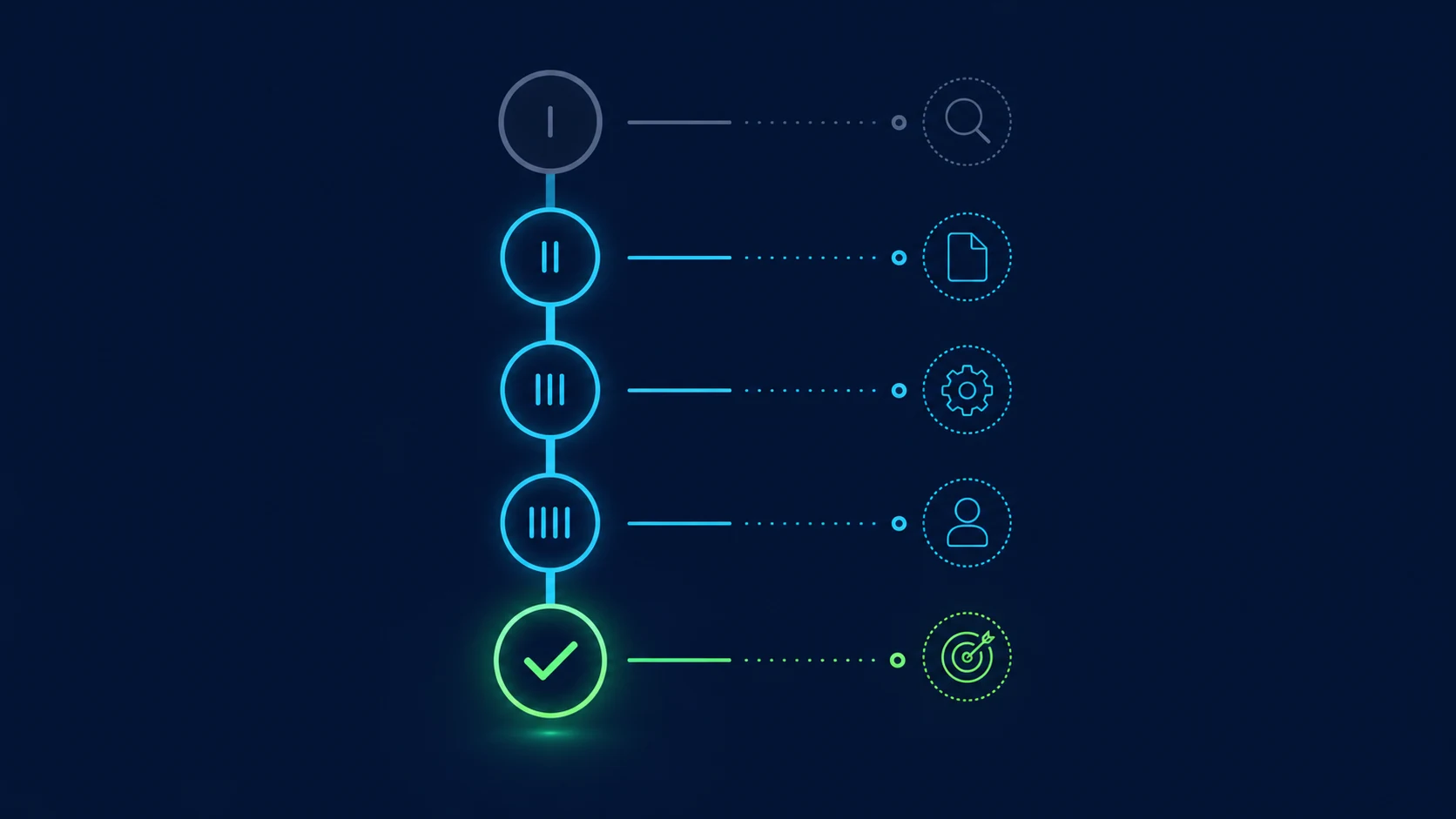
Inside the Canton Egypt B2B Lead Generation Strategy: A 5-Step Playbook
The exact playbook mirrors the diagnose-to-execute sequence at the center of the Commercial Growth System™, compressed into an eight-week sprint instead of a six-month build. Five moves, in order.
Find the Real Decision Problem
Before writing a single piece of content, the question was not “how do we get more traffic” but “why would a trade buyer choose Canton Egypt over the supplier they already trust.” Most B2B lead generation strategy work skips straight past this question and goes directly to channel tactics.
Fix Authority Before Asking for Attention
Canton Egypt’s positioning was rebuilt around one specific, provable claim about the China-Egypt trade corridor, instead of the generic language every competitor already uses. Authority had to exist before any outreach could realistically convert.
Stand Up an AI-Assisted Pre-Sales Layer
Content, FAQs, and outbound messaging were built to answer the specific questions trade buyers ask before they ever book a call, so the groundwork was already done by the time a real conversation started.
Route Every Channel to One Conversion Point
Instead of spreading effort across five half-built channels, the playbook funneled WhatsApp, LinkedIn, and organic search traffic into a single, simple next step, so interest stopped leaking between channels.
Compound in the Second Half of the Sprint
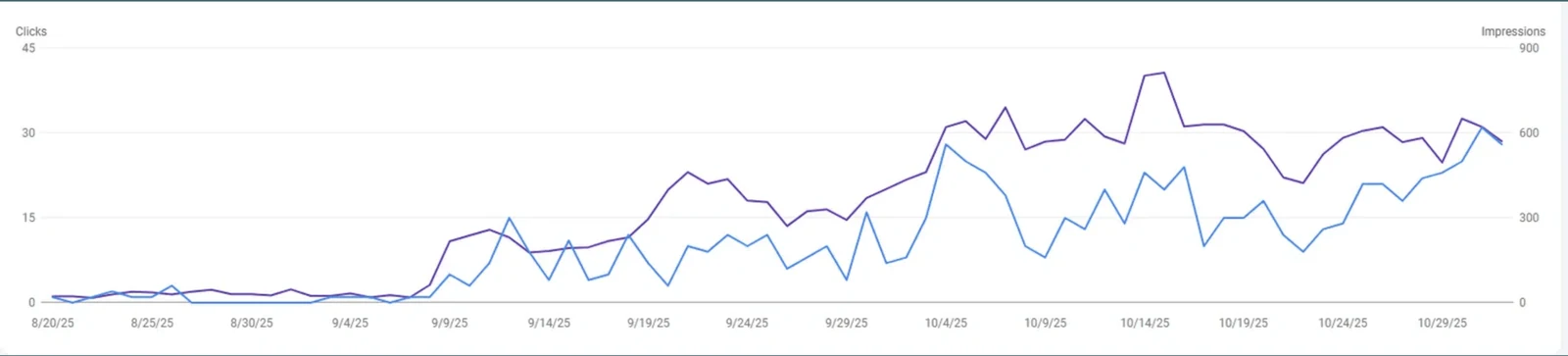
The first four weeks built the foundation. The second four weeks is where the bulk of the 764 organic clicks accumulated, because the earlier positioning and content work finally had time to compound.
What an AI-Assisted Pre-Sales Layer Actually Looks Like for Trade Buyers
Step 3 in the playbook, the AI-assisted pre-sales layer, is the part most lead generation advice skips entirely. In practice, it meant mapping the specific questions a trade buyer asks before ever picking up the phone: what does this company actually ship, what does a typical order timeline look like, who else has worked with them, and what happens if something goes wrong mid-shipment.
Every one of those questions got a clear, honest answer built into the content before outreach ever started, so a prospective buyer checking Canton Egypt out after a referral found real answers instead of a placeholder “contact us for a quote” page. That is the actual function of an AI-assisted pre-sales layer inside a working B2B lead generation strategy: it does the explaining so the sales conversation can start further along, not from zero.
None of this required a chatbot bolted onto the website. It required the same questions a good salesperson would answer live, written down once, structured well, and made findable before the first call ever happened.
Why Organic Beat Paid Outreach in an 8-Week Window
Paid outreach was on the table and deliberately set aside. Cold outbound in the China-Egypt trade corridor runs into a trust problem paid spend cannot solve quickly: an unfamiliar company reaching out cold reads as risk, not opportunity, to a buyer who is used to vetting partners through people they already know.
Zero paid outreach spend was not a budget constraint here, it was the strategy itself. Building the organic footprint first, with no paid outreach spend behind it, was central to how Canton Egypt’s growth approach actually worked in practice.
The Cost of Getting a B2B Lead Generation Strategy Wrong in Trade and Manufacturing
Most trade and manufacturing companies that try lead generation once and give up are not failing because the channel is broken. They are failing because they measured a long sales cycle against a short attention span. An RFQ in this corridor can take weeks to move from first contact to signed terms, and a strategy judged after two or three weeks looks like it failed when it has barely had time to work.
The real cost is not the wasted ad spend, though that adds up too. It is the opportunity cost of the RFQ cycles that moved past a company that was not visible or credible at the moment a buyer went looking. Every referral that ends in a Google search with no findable answer is a lead that quietly goes to whichever competitor showed up first.
That is the actual argument for treating a B2B lead generation strategy as infrastructure rather than a campaign. The corridor keeps generating referral moments whether or not a company is ready for them, and being ready is the entire difference between capturing that demand and losing it to someone else’s better-prepared competitor.
Correction, 2 September 2026. An earlier version of this page said 764 organic leads and described the figure as internally tracked. Both were wrong. The number is 764 organic clicks, verified in Google Search Console, alongside 26,121 impressions over the same eight weeks. 709 of the 764 clicks, 92.8 percent, came from a single keyword. The wrong word came from one slide of the original results deck, whose own Search Console panel said clicks. It is corrected here in the open rather than quietly, because a case study is only worth what its weakest number is worth.
What the Numbers Actually Show
764 organic clicks and 26,121 impressions in 8 weeks, from zero starting presence, with no paid outreach spend behind any of them. The figure is verified in Google Search Console. 709 of the 764 clicks, 92.8 percent, came from a single keyword, and that concentration is published here rather than buried, because a result carried by one query is a different kind of result and the reader deserves to know which kind this is. There was no on-site conversion tracking in that window, which is exactly why this reports clicks and cannot report leads.
Three other engagements in the same portfolio are verified the same way. Smile Pharmacy NJ grew organic clicks 429 percent and impressions 3,132 percent over four months, verified in Google Search Console. Eco Clean KSA produced SAR 77,483 in verified organic revenue over six months, confirmed in GA4 and Search Console. Mis Egypt Travel generated 2,450 organic clicks and 137,000 impressions in three months from a standing start, verified the same way. Canton Egypt is verified to the same standard.
What This B2B Lead Generation Strategy Looks Like for Trade and Manufacturing Companies
Trade, import-export, and manufacturing companies share a buying pattern that most marketing advice ignores: long sales cycles, relationship-driven vetting, and decisions made by more than one person. Any lead generation strategy for this audience has to hold up across all three, not just generate clicks on a landing page.
That means fewer channels, executed properly, instead of more channels executed thinly. It means positioning that survives an actual factory-floor conversation, not just a webpage. And it means treating every piece of content as pre-sales material a buyer will check before they ever pick up the phone, the same pre-sales pattern behind the Commercial Growth System™.
What To Ask Before You Trust Any Lead Generation Case Study
You should not take this case study, or anyone else’s, at face value without checking it. Before you accept any number as proof of a working B2B lead generation strategy, ask these five questions.
- Which metric is it, clicks or leads, and is the number verified in a third-party platform like Search Console or GA4?
- What was the exact timeframe, start date to end date, behind the number?
- Was there any paid spend involved, and if so, how much of the result actually depended on it?
- Does the strategy account for how this specific industry’s buyers actually make decisions?
- Would the same B2B lead generation strategy work in a market with a different starting level of trust?
A lead generation strategy that ignores how your buyer actually decides is not a strategy. It is a template with your logo on it.
The Standard Isn’t the Lead Count, It’s the Decision Behind It
764 is a number worth stating, but the number is not the point. The point is that Canton Egypt’s playbook was built around the actual decision problem trade buyers face, not around whichever tactic happened to be trending that quarter.
That is the same principle behind every engagement in this portfolio. Growth is a decision problem before it is a lead-generation problem, and a B2B lead generation strategy only works when it is built around that decision, not around a vanity metric.
Sales outcomes are decided before the sales process even starts. A B2B lead generation strategy that does not account for that is optimizing for the wrong moment.
FAQ: B2B Lead Generation Strategy for Trade and Manufacturing Companies
What makes a B2B lead generation strategy different for trade and manufacturing companies?
Trade and manufacturing buyers rely on referrals, trade fairs, and long RFQ cycles far more than self-serve web funnels, so a B2B lead generation strategy for this audience has to prioritize relationship-driven trust signals over generic gated-content tactics.
Is the Canton Egypt 764 figure verified through Google Search Console or GA4?
Yes. The 764 is organic clicks, verified in Google Search Console, alongside 26,121 impressions in the same eight weeks. 709 of those clicks, 92.8 percent, came from one keyword. An earlier version of this page called them leads and called the figure internally tracked. Both were wrong and are corrected on the page above.
Can this B2B lead generation strategy work without any paid ad spend?
Yes. Canton Egypt ran zero paid outreach spend across the full eight-week sprint, and the organic-first approach was a deliberate choice, not a budget limitation.
How long does it take to see results from this kind of B2B lead generation strategy?
Canton Egypt saw its results within eight weeks, though timelines vary by starting trust, market maturity, and how much groundwork already exists before the sprint begins.
Does this B2B lead generation strategy apply outside the China-Egypt trade corridor?
Yes. The same five-step playbook applies to any relationship-driven, long-cycle B2B vertical, from manufacturing and engineering to import-export more broadly.
See What a Growth Diagnostic Would Find in Your Trade Business
The five-step playbook behind Canton Egypt’s 764 clicks starts with a diagnosis, not a tactic. Fifteen questions, about two minutes, and it tells you whether to invest, fix first, or stop.