
Engineering and Manufacturing Firms: Your Website Ranks. Your RFPs Still Go Cold.
You show up on page one. The traffic is real. Yet the quotes you send disappear into silence. The gap between ranking and winning is where most engineering and manufacturing pipelines quietly leak.

Manufacturing lead generation is broken in a very specific way for engineering and industrial firms: the website ranks, the traffic arrives, and the RFPs still go cold. You are visible, you are getting found, and yet the quotes you send out land in silence. If that describes your last quarter, the problem is almost never the ranking. It is what happens in the buyer’s head between finding you and choosing you.
Most commercial directors and general managers respond to cold RFPs by asking for more traffic. More keywords, more pages, more visibility. But traffic was never the constraint. A firm can dominate its search results and still lose every serious bid, because manufacturing lead generation does not end when someone lands on your site. It ends when a procurement committee decides you are the safe choice, and that decision runs on evidence you may never have put in front of them.
This article is about that gap. Why ranking and winning are two different jobs, what engineering buyers actually check before they shortlist you, and how to rebuild your pipeline around proof so the quotes you send stop going cold. None of it requires a bigger ad budget. Most of it requires deciding what a serious buyer finds when they check whether you can be trusted with a contract.
Why Manufacturing Lead Generation Fails After the Click
Here is the uncomfortable truth about manufacturing lead generation: the click is the easy part. Ranking a page for an industrial keyword is a solved problem. Being chosen after that click is where firms lose, and it is a completely different skill from being found.
An engineering buyer does not behave like a consumer. They are rarely buying alone, they are rarely buying fast, and they are almost never buying on impulse. A capital equipment purchase or a multi-year supply contract passes through technical reviewers, procurement, finance, and often a plant manager who has to live with the decision for a decade. Every one of those people can quietly veto you, and most of them never fill out your contact form.
So when your RFPs go cold, it is usually not because the buyer forgot about you. It is because someone in that group checked you out, could not find enough evidence to defend choosing you, and moved on to a competitor who looked safer. That is a manufacturing lead generation failure, but it happened in a room you were never in.
Ranking gets you into the search. Proof gets you onto the shortlist. Confusing the two is why strong firms with strong websites still watch their RFPs go cold.

Your Website Ranks, So Why Do RFPs Go Cold?
Think about what actually happens after an engineering buyer finds your site. They read a capability page. It looks fine. Then they go looking for the things that page cannot tell them: has this firm delivered a project at our scale, will they still exist in five years, can they prove the quality claims they make, and does anyone independent vouch for them.
If those answers are thin or missing, the buyer does not email you to ask. They simply weight you lower and keep looking. This is the silent part of the shortlist, and it is where the trust built by a good ranking quietly evaporates. Being findable and being credible are not the same job, and most engineering firms have only done the first one. That imbalance is the single most common manufacturing lead generation flaw I see.
The frameworks I use for B2B growth all point at this same gap. Sun Tzu wrote that the victorious win first and then go to war. Applied to a bid, it means the RFP is decided before the RFP is written, on the ground of who already looked most credible. If a competitor prepared that ground and you did not, you are fighting the bid from behind before it starts.
This is also why marketing strategy for engineering firms so often underperforms when it is measured only in rankings and clicks. Those metrics describe visibility, not persuasion. A firm can win every keyword in its category and still lose on the one axis that decides contracts, which is trust the buyer can verify without talking to you.
The Real Manufacturing Lead Generation Problem Is a Trust Gap
The distance between how convincing you are on your own site and how convincing you are when someone checks you independently is the trust gap. In manufacturing lead generation, that gap is where deals die, and it is invisible in your analytics because nothing bounces or errors. The buyer just goes quiet.
Robert Cialdini’s research on influence gives this a name most engineers respect: social proof and authority are among the strongest levers in any considered decision. A procurement lead who cannot find independent evidence that you have done this before is not being difficult. They are doing their job, and your absence of proof is doing your competitor’s job for them.
The Brain Audit framework describes the same thing from the buyer’s side. Before anyone commits, they run a silent checklist of objections, and if even one big objection goes unanswered, the whole deal stalls. Cold RFPs are usually one unanswered objection away from being warm ones. The firm never hears the objection, so it never fixes it, and the pattern repeats every quarter.
Good lead nurturing for B2B manufacturing is really the discipline of answering those objections before they are ever spoken. Not with more emails, but with visible, checkable evidence sitting exactly where a nervous buyer looks for it. That is the part of manufacturing lead generation that most firms skip, because it is slower and less flattering than chasing rankings.
What Buyers Check Before an RFP Ever Reaches You
If you want to fix cold RFPs, start by running the buyer’s own check on yourself. When a serious engineering buyer is quietly building a shortlist, they look for a specific set of signals, and their absence is what pushes you down the list. Sound manufacturing lead generation begins with knowing what those signals are.
- Proof of comparable work: projects at a similar scale, sector, or complexity, described in enough detail to be believable rather than generic.
- Evidence of longevity and stability: signs the firm will still be here to honour a warranty or a long supply agreement.
- Independent credibility: certifications, named clients, third-party mentions, anything a buyer did not have to take purely on your word.
- Technical depth that matches theirs: content that speaks to their engineers, not only to their purchasing department.
- A findable answer when they ask a research tool or a peer who to consider in your category.
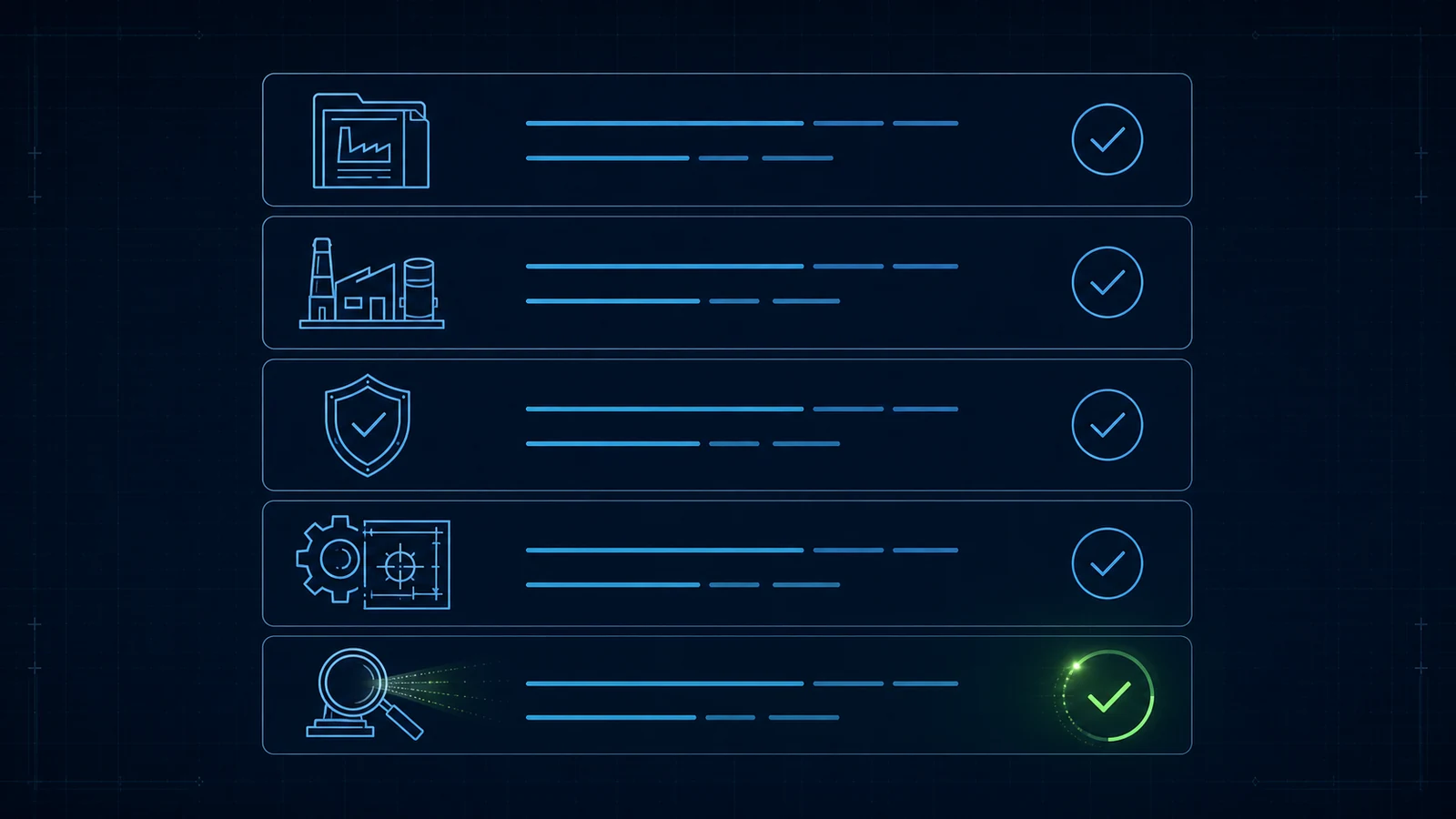
Notice that none of these is a ranking. Every one is a proof asset, and proof assets are what convert a click into a shortlisted supplier. This is the layer that turns raw visibility into real manufacturing lead generation, and it is almost always where under-performing pipelines are thinnest.
Rebuilding Manufacturing Lead Generation Around Proof
The reframe that changes everything is this: stop treating manufacturing lead generation as a volume problem and start treating it as a decision problem. The question is no longer how do I get more engineers to my site. It is what does a buying committee find when they check whether we are the safe choice, and does it match what we would want them to find.
That single shift reorders your whole priority list. Proof matters more than reach. A detailed, verifiable project story outperforms ten more blog posts aimed at the top of the funnel. Effective digital marketing for engineering companies is mostly the patient construction of evidence, arranged so a cautious buyer can talk themselves into you without a sales call.
It also changes what you measure. Instead of celebrating a ranking, you ask whether the page a buyer lands on actually answers the objection that was stalling them. A page that ranks but does not reassure is a manufacturing lead generation liability dressed up as a win, because it brings buyers to a door that then fails to let them in.
More traffic to a firm that has not earned trust just means more people confirming a decision that was never going to go your way.
A Manufacturing Lead Generation Playbook That Survives the Shortlist
Here is the practical order of operations I use to close the trust gap for engineering and industrial firms. It is deliberately sequenced, because doing it out of order wastes budget on reach before the proof exists to convert it.
Run the buyer’s silent check on yourself
Search your own firm the way a procurement lead would, list every objection that goes unanswered, and map exactly where in the journey your RFPs go cold. This diagnosis is the foundation of any honest manufacturing lead generation plan.
Turn delivered work into verifiable evidence
Document real projects with specifics: scope, scale, sector, outcome. Add certifications, named references, and technical depth your buyer’s engineers can respect. This is the raw material of lead generation for manufacturing companies that actually closes.
Put the evidence where nervous buyers look
Position proof on the exact pages and profiles a committee checks before they shortlist, not buried in a downloads folder. Visibility of proof is as important as the proof itself.
Make sure you surface when buyers ask around
Increasingly buyers ask a research assistant or a peer network who to consider. B2B manufacturer lead generation now depends on being a findable, credible answer at that moment, not only on classic rankings.
Track shortlisting, not just sessions
Judge the system by whether cold RFPs are warming, not by traffic alone. The point of manufacturing lead generation is won contracts, and that is the only number that settles the argument.
What This Looks Like in Practice
Two engagements outside pure manufacturing show the same mechanism at work, because the trust gap behaves identically across considered B2B purchases. Both are drawn from verified client work, with the tracking source stated plainly.
Eco Clean KSA
In a crowded category where buyers default to comparing on price, we built visible authority instead of entering the price war. Over six months, from November 2025 to May 2026, with zero paid ads, the work produced 2.11 million search impressions, 23,000 organic clicks, an average position of 8, and SAR 77,483 in verified organic revenue. Source: Google Analytics 4 and Search Console, verified.
Canton Egypt
An industrial trade business was already winning meetings through outbound effort, but the trust built in the room evaporated when buyers searched afterward and found nothing. In eight weeks of organic building from zero, the engagement generated 764 organic leads with no paid spend. This figure is reported through internal Commercial Growth System tracking rather than a third-party platform, so it is labeled separately from the GA4-verified numbers above.
Neither firm added more outreach. Both fixed what a buyer found when they checked, which is the same move an engineering or manufacturing firm makes to stop its RFPs going cold. Strong marketing strategy for engineering firms is not louder promotion. It is closing the gap between the promise and the proof, and that is what durable manufacturing lead generation is built on.
How to Audit Your Own Manufacturing Lead Generation
You can start this without hiring anyone. Open an incognito window and search for your firm and your main service the way a buyer would. Then ask three honest questions about what comes back.
First, does the evidence a cautious buyer needs actually exist and is it easy to find, or does your site only describe what you do without proving you have done it well. Second, if a competitor’s site sat beside yours, whose proof would a nervous procurement lead trust more. Third, when you ask a research tool who the credible firms in your category are, do you appear at all.
Where the answers are weak, you have found the leak. That is where manufacturing lead generation is failing you, and it is fixable, usually faster and cheaper than another quarter of chasing rankings that were never the real constraint. Treat this audit as the starting point of every manufacturing lead generation decision that follows. Google’s own guidance on helpful, people-first content points the same way: demonstrable expertise and real-world evidence are what earn a buyer’s trust, and independent research such as the Gartner B2B buying journey confirms most of the decision happens before a supplier is ever contacted.
Fix what a buyer finds when they check you, and cold RFPs start to warm without a single extra dollar of ad spend.
FAQ: Manufacturing Lead Generation for Engineering Firms
My site ranks well, so why are my RFPs still going cold?
Because ranking and winning are different jobs. Manufacturing lead generation does not end at the click. Engineering buyers check for proof of comparable work, stability, and independent credibility before they shortlist you, and when that evidence is thin they go quiet instead of asking. The ranking is fine; the proof layer is missing.
Isn’t more traffic the answer to a weak pipeline?
Rarely. If buyers are not converting, more of them will not convert either. Adding traffic to a firm that has not earned verifiable trust just increases the number of people confirming a no. Fix the trust gap first, then scale the reach.
What proof actually matters to engineering and procurement buyers?
Detailed comparable project stories, certifications, named references, technical depth that respects their engineers, and independent credibility a buyer did not have to take on your word. These proof assets are what convert a ranking visit into a shortlisted supplier.
How is this different from normal lead generation for manufacturing companies?
Most lead generation for manufacturing companies optimizes the top of the funnel. This approach optimizes the decision, placing verifiable proof exactly where a buying committee checks before they commit, so the quotes you send stop landing in silence.
How long does it take to warm up cold RFPs?
It depends on how thin your proof layer is, but because you are fixing conversion rather than building traffic from scratch, results often appear faster than a pure ranking play. The first step is a diagnostic that finds exactly where in the journey your RFPs go cold.
See Where Your RFPs Are Going Cold
Get a free growth audit that runs the buyer’s silent check on your own firm, shows exactly where your manufacturing lead generation is leaking, and names the proof assets that would warm your cold RFPs. No inflated benchmarks, just what a serious buyer actually finds today.