
Medical Device Marketing Agency Test: Ask Three AI Engines Who To Shortlist for a Saudi Hospital
Your buyer builds the shortlist in a chat window before anyone picks up the phone. Here is the fifteen query test that tells you whether your name is in it, and what to do with the answer.
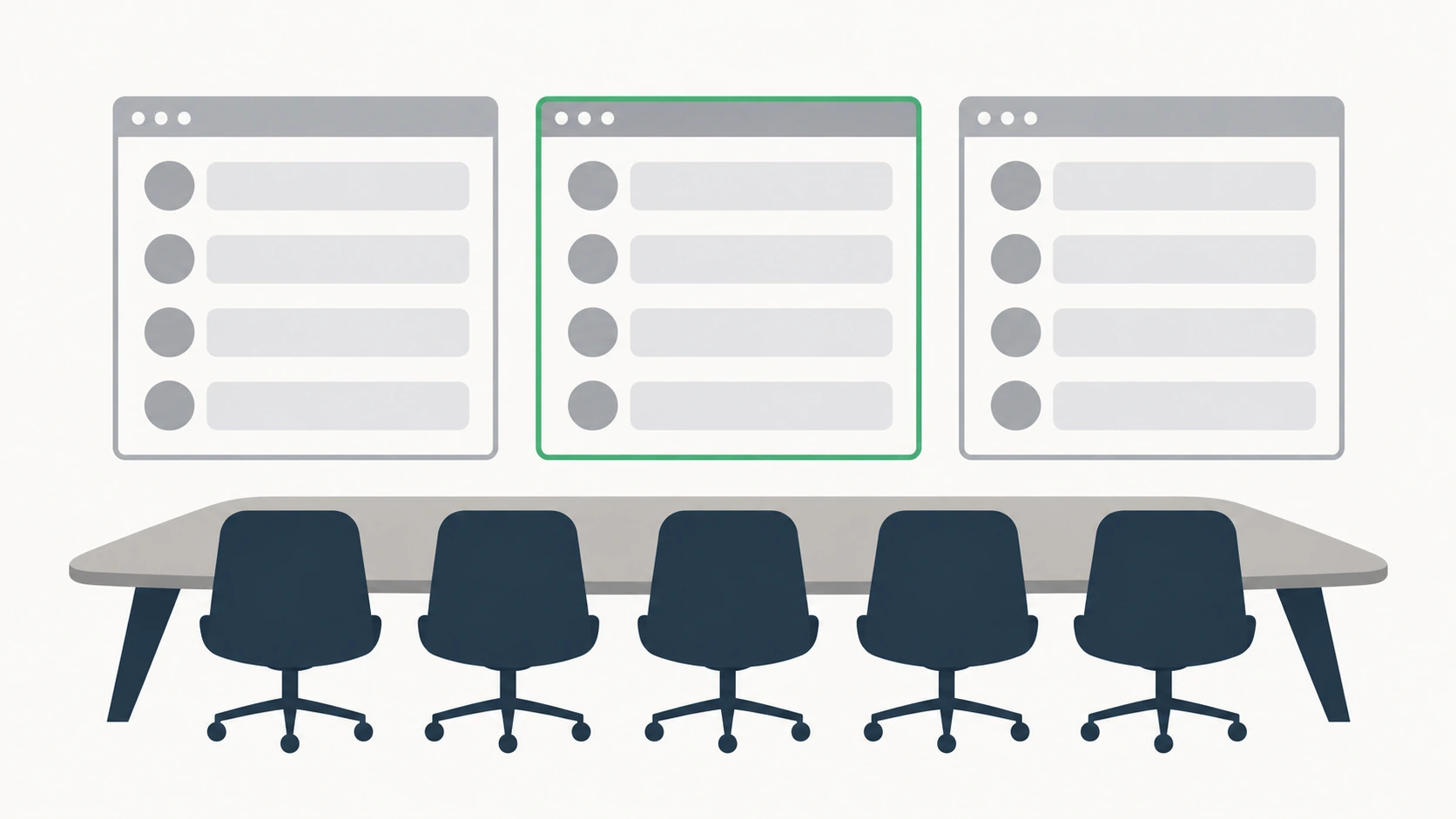
A medical device marketing agency is judged on one thing now: whether your name appears when a hospital buyer asks an answer engine who to shortlist. Ask ChatGPT, Gemini and Perplexity the question your buyer asks. The names that come back are your real competitive set.
A procurement committee in Riyadh has to replace a fleet of infusion pumps. Before anyone contacts a distributor, one person on that committee opens a chat window and types a sentence. Something close to: which suppliers should a three hundred bed hospital in Riyadh consider for infusion pumps, and what should we ask them.
Four or five company names come back, with reasons attached. Those names are now the shortlist. Everything that happens afterwards, the tender, the demo, the reference call, is a contest between them.
If your company is not one of the names, you will never know this happened. There is no impression, no click, no line in any report. You will find out eight weeks later when a tender you never saw closes.
The shortlist is built before anyone calls you
This is not a prediction about the future of search. It is already measurable in ordinary analytics. One client page we run received eighty two referral sessions from ChatGPT in a single quarter, alongside 2,450 organic clicks and 137,000 impressions, all verified in GA4 and Google Search Console. Those eighty two people were not browsing. They had asked a question, been given an answer, and followed it. You can read the full numbers in the case where answer engines sent real buyers to a client page.
Eighty two is a small number. That is exactly why it matters. It is the visible edge of a behaviour that leaves almost no trace, and it is growing from a base of zero.
So the useful question is not whether buyers use these tools. It is a much colder one. When they do, whose name comes out?
The test, and it costs you one afternoon
You do not need a tool, a subscription or a report for this. You need three browser tabs and a blank page.
- Write the buyer’s question, not yours. Not “best infusion pump supplier”. Write the sentence a hospital director would actually type, with the country, the size of the institution and the category in it.
- Ask it in ChatGPT, Gemini and Perplexity. Same sentence, three engines, one at a time.
- Write down every company name that comes back, in order, for each engine.
- Write down every source the engine cites. This is the part almost everyone skips and it is the part that tells you what to do.
- Repeat the question four more ways. Swap the city, swap the buyer’s job title, ask it as a comparison, ask it as “what should we ask them”.
Fifteen queries. One page of notes. At the end you have three things: your real competitive set, the sources that decide it, and a yes or no answer about whether you are in the room.
Run the Growth Qualifier before you commission anything. Two minutes, fifteen questions, and it tells you whether the problem is visibility or something upstream of it.
Reading the result: the sources are the whole finding
The names are interesting. The citations are actionable.
In this category the engines almost never cite the manufacturer’s own website. They cite regulator registers, distributor and dealer pages, trade press, procurement portals, association directories, comparison articles written by people who have never touched the device, and occasionally a LinkedIn post. That is the source layer, and it is where the shortlist is actually assembled.
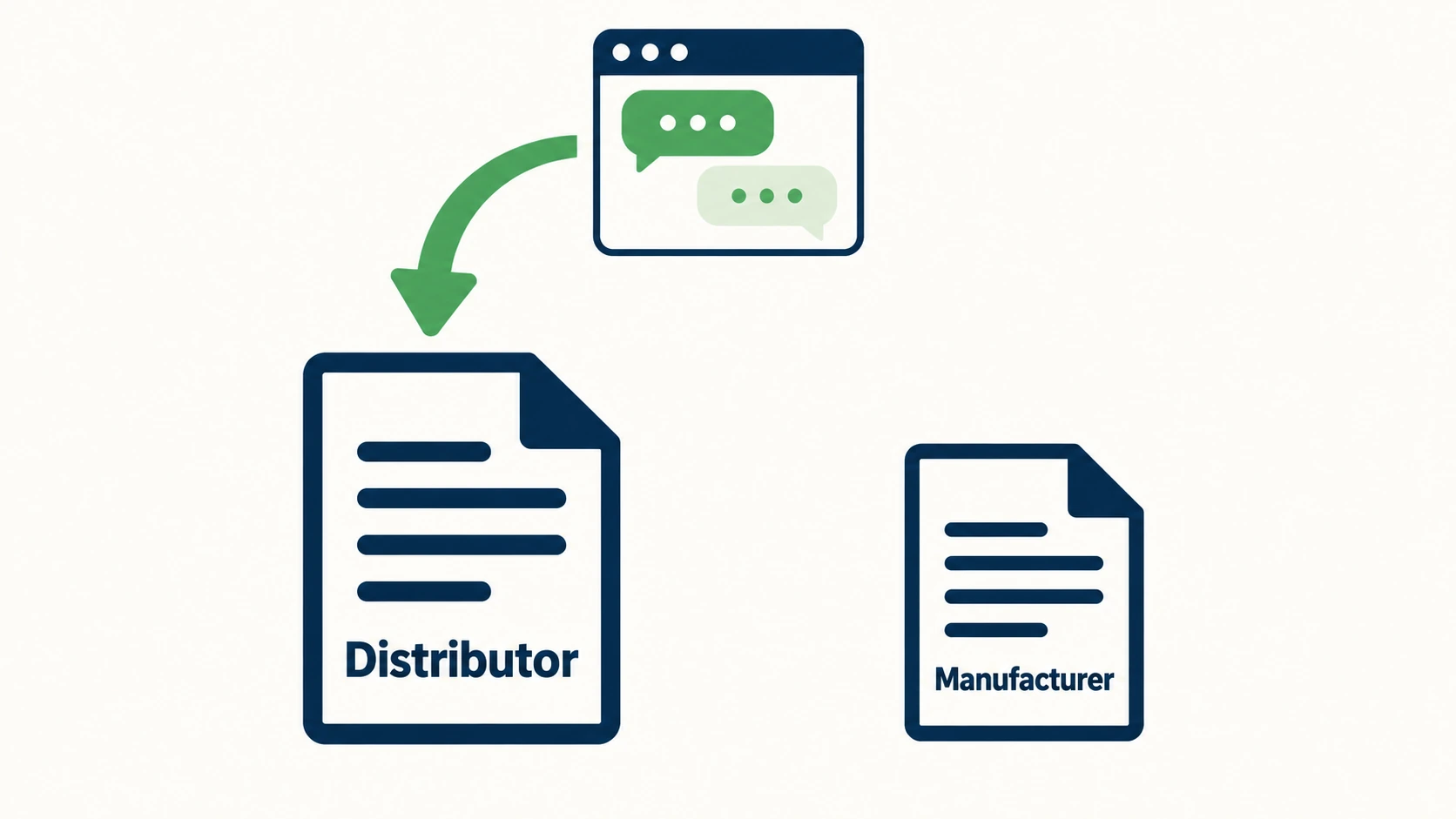
Which produces an uncomfortable finding for most manufacturers. Your website is not competing for that answer. Your distributor’s website is. And in most MENA markets your distributor also legally holds your product registration, which means the page the engine trusts and the certificate the regulator recognises both carry somebody else’s name.
Medical device marketing strategy after you have the result
A medical device marketing strategy built on this evidence looks different from one built on a channel plan, because it starts from a gap you can point at rather than from a list of tactics.
Three patterns show up again and again when we run this test with clients.
- You are absent entirely. No engine names you in any phrasing. The problem is not ranking. It is that nothing exists, anywhere the engines read, that says what you do and for whom.
- You are named but described wrong. The engine has you in the right industry and the wrong segment, usually because the only public description of you is a distributor’s product page or a press release from a launch six years ago.
- You are named last, with a hedge. “Also consider” is not a shortlist position. It usually means the engine found one weak source and no corroboration.
Each of those three needs a different response, and none of them is fixed by a larger advertising budget. That is the practical reason a diagnosis comes before a campaign.
If the three patterns above sound familiar, get the verdict rather than a proposal. Two minutes, no email needed to see your result.
Saudi Arabia is the hardest version of this test
Run the same fifteen queries against Riyadh and against a European city and compare them. The Saudi answers are consistently thinner, and the reason is structural rather than technical.
Medical device registration in Saudi Arabia sits with the local authorised representative, not with the manufacturer, and that is the normal shape across the region rather than the exception. In fourteen of fifteen MENA markets we checked against the regulators themselves, the registration is legally held by the local partner. Iraq is the only market where the manufacturer holds it directly.
So in the market where the engine has the least to read about you, the entity it can read about is the one holding your licence. That is not a marketing problem with a regulatory footnote. It is a commercial position problem that happens to be visible in a chat window.
There is also a documented silence worth knowing about. Only Saudi Arabia and Türkiye publish anything at all on software as a medical device. The other thirteen markets publish nothing, which was verified by searching each regulator’s own instrument register rather than assumed. If your device carries software, the engines have nothing authoritative to cite about how it is treated, because the authorities have not written it yet.
What a medtech marketing agency should be able to show you
Most agency conversations start with what the agency does. That is the wrong end. Start with what they can prove and what they refuse.
Four questions worth asking any medtech marketing agency before the scope conversation.
- Run the test in front of me. Ask them to type your buyer’s question into an answer engine live, on the call, and read the result out loud whether or not you are in it.
- Show me a client whose referral traffic from answer engines you can produce in analytics. Not a screenshot of a chat window. A GA4 or Search Console view.
- Name a kind of business you have refused. An agency that has never said no is selling capacity, not judgement.
- What would you do if the diagnosis says do not spend? The answer tells you whether you are buying advice or activity.
For a sense of what verified results look like outside healthcare, this GCC B2B engagement produced SAR 77,483 of organic revenue with zero ad spend, measured in GA4 and Search Console. Different sector, same discipline: the numbers come from the platform, not from a deck.
Agency, consultant or company: what you are actually buying
The three words get used interchangeably and they are not the same purchase.
A medical device marketing company usually sells production. Content, design, campaign management, reporting. You bring the strategy and they build the output. This works when you already know what is wrong.
A medical device marketing consultant usually sells a diagnosis and a plan, and then leaves. This works when you have an execution team and no clear direction.
An agency in the sense that matters here sells a decision first and execution second, and it should be willing to tell you that the decision is not to spend. The system decides the channel: SEO, answer engine visibility, LinkedIn, paid. Not a menu chosen in advance.
The distinction matters commercially because the three are priced against each other while doing different jobs, which is how a company ends up paying for output that solves a problem it never had.
Turning the result into a medical device marketing plan
A medical device marketing plan that comes out of this test has a shape most plans do not have: it names what it will not do.
The sequence that works is short.
- Fix the description before the volume. If the engines describe you wrongly, more content in the wrong description makes it worse.
- Own the sources you can own. Your own site, your own case evidence, the association and registry entries with your name on them, the distributor pages you can influence contractually.
- Write for the question, not the keyword. The engines answer sentences. A page that answers one buyer question completely outperforms five pages that mention a phrase.
- Re run the fifteen queries every quarter and keep the sheets. Movement in that sheet is the only leading indicator you have.
If you want to see how the same logic applies to a software purchase rather than a device, the implementation cost article covers the version of this that kills healthcare software deals.
Not sure which of the three positions you are in? Get my verdict.
The one number to write down
Out of fifteen queries, in how many did your company name appear at all?
Zero is common and it is not a catastrophe. It is a starting position, and it is the first honest number most manufacturers in this category have ever had about their own visibility.
What would be a catastrophe is spending another year assuming the shortlist starts with a phone call.
Medical device marketing agency: the questions buyers and vendors ask
What is a medical device marketing agency actually responsible for?
A medical device marketing agency is responsible for the position a manufacturer holds in a buyer’s mind before any contact happens, not for the volume of material it produces. In this category the purchase is decided by a committee that shortlists on evidence: in country registration status, service response time, distributor capability and a named reference site of the same size.
An agency that only produces campaigns is working on the last ten percent of that decision. The work that changes outcomes is making sure the sources a buyer and an answer engine both consult carry an accurate, specific description of what the company does, for whom, and with what proof. Production follows that. It does not replace it.
How do I check whether AI engines recommend my medical device company?
Write the sentence your buyer would type, including the country, the size of the institution and the product category. Ask it in ChatGPT, Gemini and Perplexity, one at a time, and write down every company named and every source cited. Then ask the same question four more ways: swap the city, swap the job title of the person asking, frame it as a comparison, and frame it as what should we ask them.
That is fifteen queries and about an afternoon. Count how many of the fifteen named your company at all. The citation list matters more than the names, because it tells you which pages the engines treat as authoritative in your category, and almost none of them will be your own site.
Why do answer engines cite my distributor instead of my website?
Because the distributor has more of what an engine looks for: a local address, a local language page, product listings tied to a market, and in most MENA markets the legal registration for the device itself. In fourteen of fifteen MENA markets checked against the regulators directly, the medical device registration is held by the local partner or authorised representative rather than the manufacturer, with Iraq the only exception.
The engine is not making an editorial judgement against you. It is reading the public record, and in that record your distributor is the entity attached to the market. Changing that means either publishing material the engines can attach to your own name, or writing influence over the partner’s public pages into the agreement.
Is answer engine visibility measurable, or is it a guess?
Part of it is measurable today. Referral sessions from answer engines appear in GA4 as ordinary traffic sources, so you can count how many people arrived from a chat interface. One client page we run recorded eighty two ChatGPT referral sessions in a quarter, verified in GA4 alongside 2,450 organic clicks and 137,000 impressions in Search Console.
What is not measurable is the much larger number of buyers who read an answer, formed a shortlist and never clicked anything. That is why the query test matters. It is the only way to observe the part of the process that leaves no analytics trace at all, and it requires no tooling beyond three browser tabs.
Do I need a medical device marketing strategy before I fix this?
You need a diagnosis, which is smaller and faster than a strategy. Run the fifteen queries and you will land in one of three positions: absent everywhere, present but described wrongly, or present as an afterthought with a hedge. Each needs a different first move, and two of the three are made worse by adding volume.
Absent means nothing exists for the engines to read, so the first job is to publish an accurate description of the company and its evidence. Described wrongly means correcting the sources that already carry your name. An afterthought usually means one weak source and no corroboration, which is a proof problem. Only after that does a channel plan make sense.
How is Saudi Arabia different from other medical device markets for this?
The answers are thinner and the reason is structural. The registration sits with the local authorised representative, so the entity with a public market position in Saudi Arabia is usually the partner rather than the manufacturer. On top of that there is a documented regulatory silence across the region: only Saudi Arabia and Türkiye publish anything at all on software as a medical device, and the other thirteen markets checked publish nothing.
Where regulators have not written, engines have nothing authoritative to cite, so they fall back on trade press and distributor pages. The practical consequence is that in the market where you most need to be legible, the public record has the least to say about you specifically.
What is the difference between a medical device marketing agency and a consultant?
A medical device marketing consultant typically sells a diagnosis and a plan and then hands it over, which works when you already have a team that can execute. A medical device marketing company typically sells production: content, design, campaign management and reporting, which works when you already know what is wrong.
An agency in the sense that matters here should sell the decision first and the execution second, including the decision not to spend. The reason the distinction is worth holding is commercial rather than semantic. All three are quoted against each other while doing different jobs, so a manufacturer can end up paying for output that solves a problem the company never had.
How often should I repeat the answer engine test?
Quarterly is enough, and consistency matters more than frequency. Keep the same fifteen queries, the same wording and the same sheet, so the only thing changing is the answer. Record the company names in the order they appear and the sources cited each time.
Movement in that sheet is a leading indicator you can act on months before it shows up in pipeline, because it reflects what the shortlist looks like rather than what has already been lost. If you change the wording each quarter you lose the comparison and the exercise becomes a curiosity. The value is entirely in running the same test against a changing market.
Is Your Name on the Shortlist, or Not?
Fifteen questions, about two minutes, and a verdict rather than a proposal. No email needed to see your result.